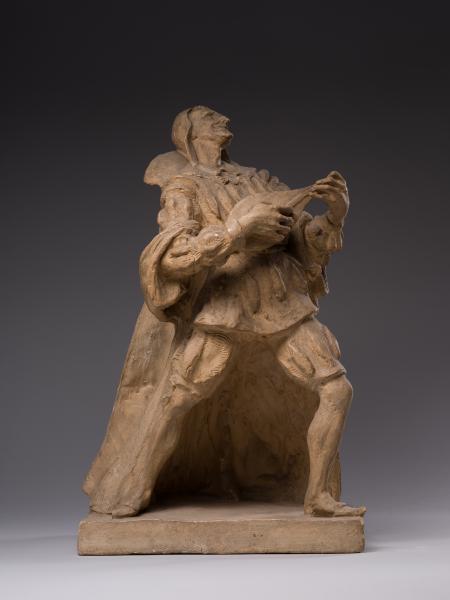
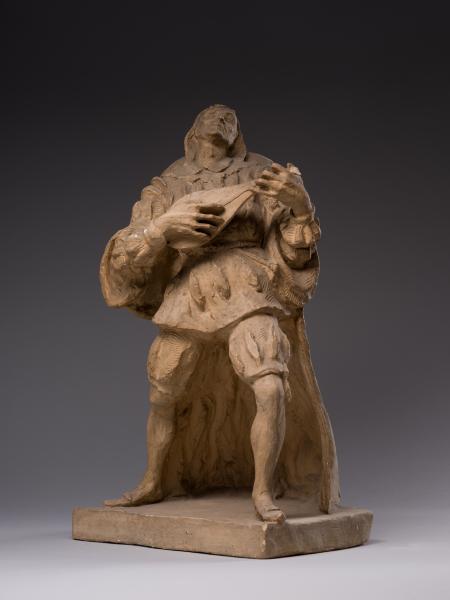
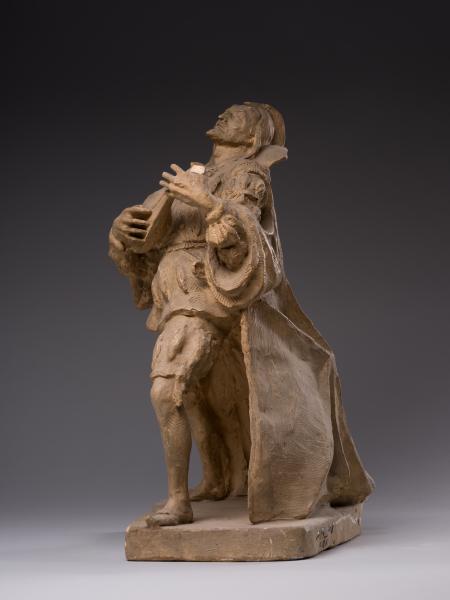
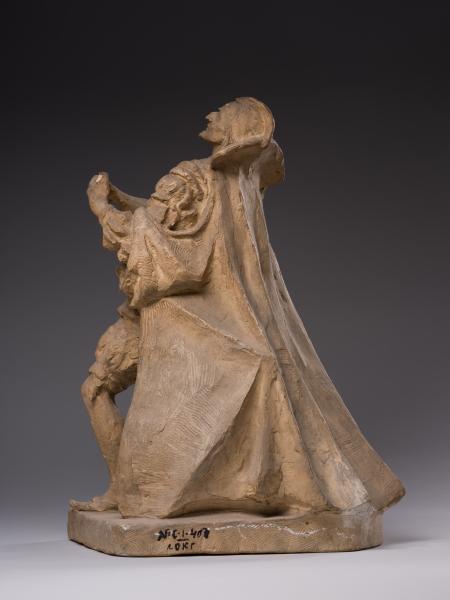
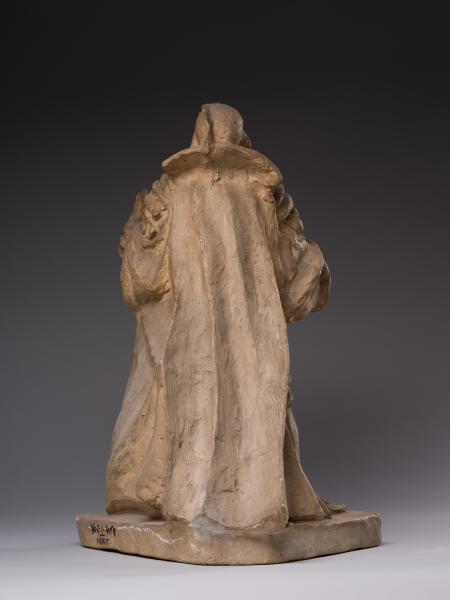
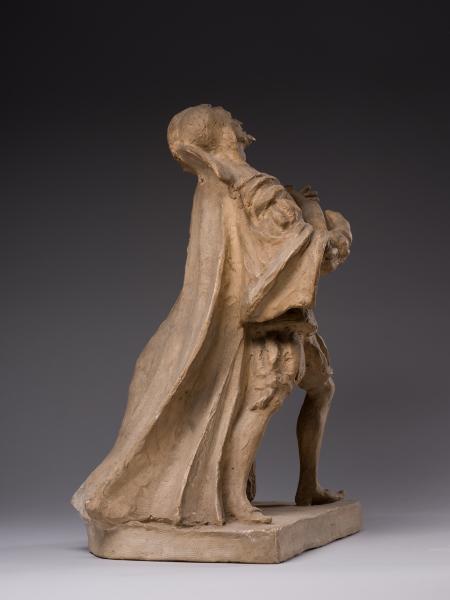
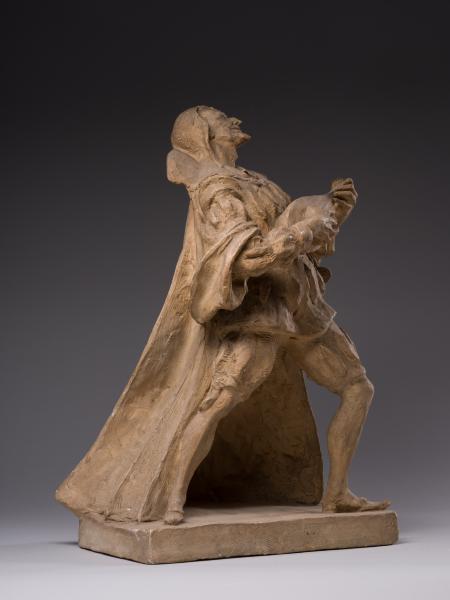
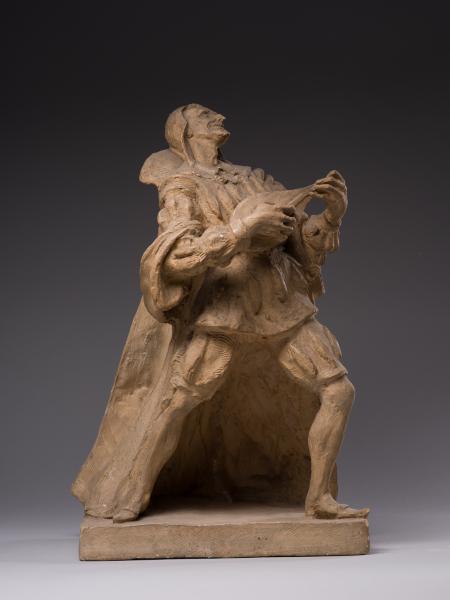
Adam Didur as Mephistopheles from Charles Gounod's "Faust"
Kazimiera Malaczynska-Pajzderska

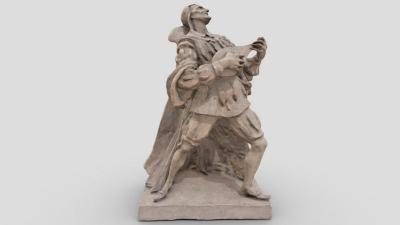
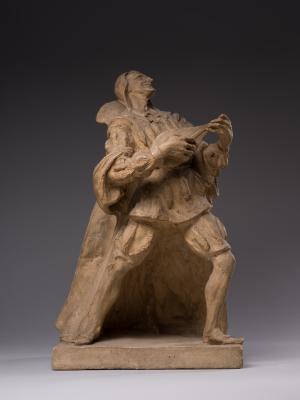
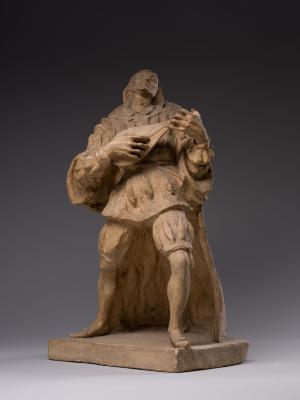
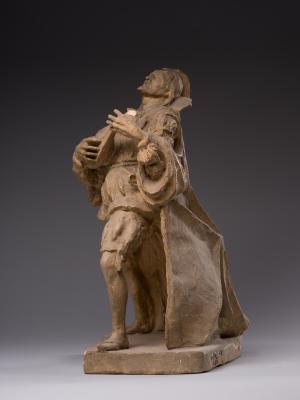
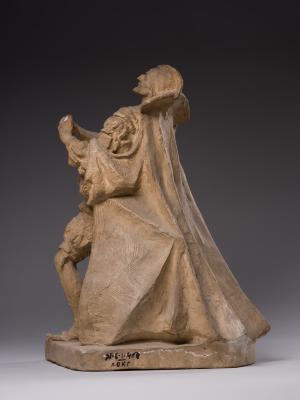
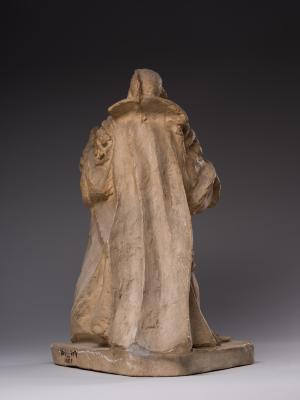
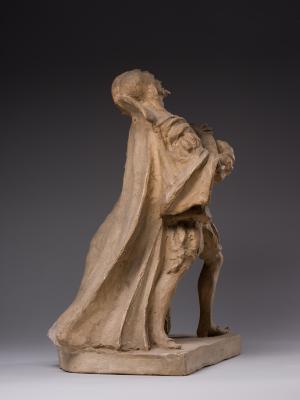
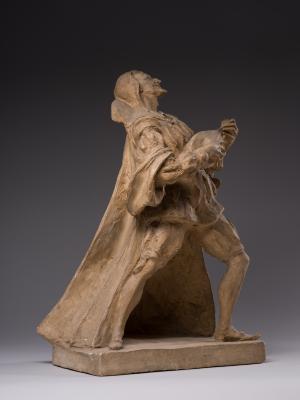
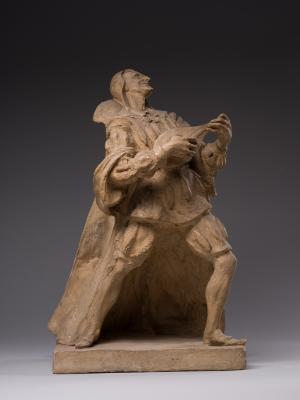
Basic information
- ID
- С-I-407
- Author
- Kazimiera Malaczynska-Pajzderska
- Name
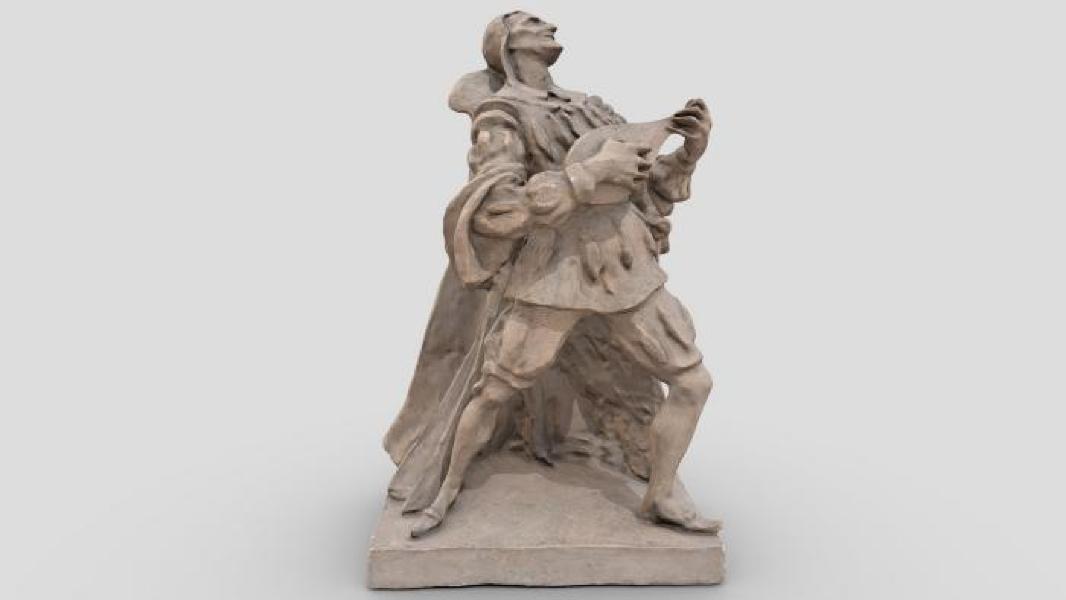
- Adam Didur as Mephistopheles from Charles Gounod's "Faust"
- Date of creation
- 1911
- Country
- Austro-Hungarian Empire
- Culture
- Contemporary times
- Technique
- moulding
- Material
- plaster
- Dimensions
- 50 x 40 x 25 cm (height x width x depth)
Additionally
- Type
- sculpture 3D
- Genre
- portraiture
- Plot
- Portrait bust
- Provenance
- National Gallery of Lviv (until 1940)
Information about author
Object description
The composition is a portrait of Adam Didur, a Polish opera singer and one of the most prominent bass voices of the turn of the 19th and 20th centuries, as Mephistopheles in Charles Gounod's "Faust". Born in Wola Sekowa near Sanok, the future singer began his studies at the Lviv Teachers' Seminary in 1894 while also singing in the university choir. He studied singing with Walery Wysocki, professor at the Conservatory of the Galician Music Society, the best singing teacher in Lviv, to whom Solomiia Krushelnytska, Oleksandr Myshuha, Oleksandr Bandrovskyi, Mykola Levytskyi and Adam Okonskyi owe their skills. He continued his singing studies with the famous Francesco Emmerich in Milan. He began his opera career at the theatre of the small Italian town of Pinerolo in Piedmont. He performed in Cairo, Alexandria, Rio de Janeiro, and Buenos Aires during the following seasons. He was accepted at the Milan opera house "La Scala" on his return to Europe. In 1908, Adam Didur sang the leading bass roles in the operas "Faust" by Ch. Gounod, "Mefistofele" by A. Boito and "Les Huguenots" by G. Meyerbee at the Great City Theatre in Lviv. Kazimiera Malaczynska-Pajzderska's impressions of the theatre at that time likely inspired her to create this portrait. The first step towards the realisation of the creative idea was the bust of Adam Didur (1910), which was exhibited at the Lviv Autumn Exhibition in November–December 1910, together with eight other newly created sculptures. The semantic basis of the work is based on the themes of transformation, man and his role, creativity as a game and game as creativity, which were popular at the turn of the 19th and 20th centuries. In addition to the portrait of the famous opera singer, the artistic aspects of the image are Mephistopheles' shrewdness, insidiousness, and mellifluence. The peculiarity of the image lies in the plastic-musical synaesthesia and the connection with the theatrical action, visualised by the emotional expression and the openness to the imaginary space of the stage. Rodin's inspiration for the sculptor's work is evident in the impulsive, almost painterly treatment of the surface, reminiscent of an Impressionist brushstroke. K. Malaczynska-Pajzderska's creative style is characterised by the sharpness of psychological characterisation, dynamics, and asymmetry of plastic masses.
Inscriptions
Signed and dated on the left side of the base: "K. Małaczyńska / 1911".
Portrayed person
- The name of the person portrayed
- Adam Didur
- Lifetime of the person portrayed
- 1874 (according to other sources – 1873) – 1946
Legal regulation
Borys Voznytskyi Lviv National Art Gallery