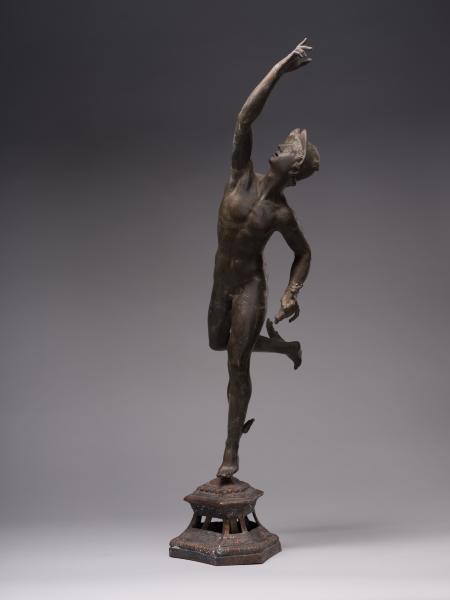
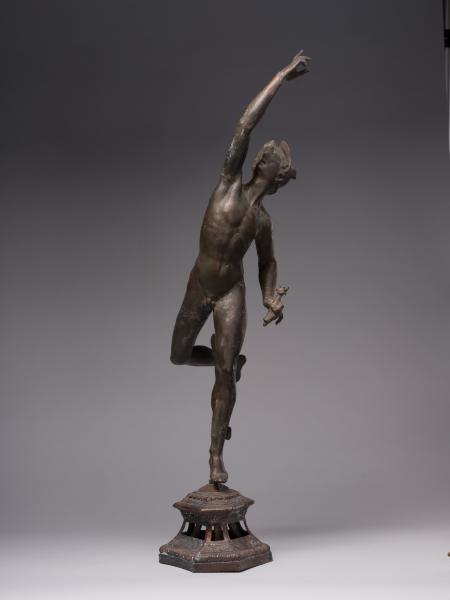
Flying Mercury
Circle of Giovanni da Bologna (Giambologna)
Basic information
- ID
- С-I-170
- Author
- Circle of Giovanni da Bologna (Giambologna)
- Name
- Flying Mercury
- Date of creation
- early 17th c.
- Country
- Germany
- Technique
- moulding
- Material
- bronze
- Dimensions
- 70 x 16 x 24 cm (height x width x depth)
Additionally
Information about author
Object description
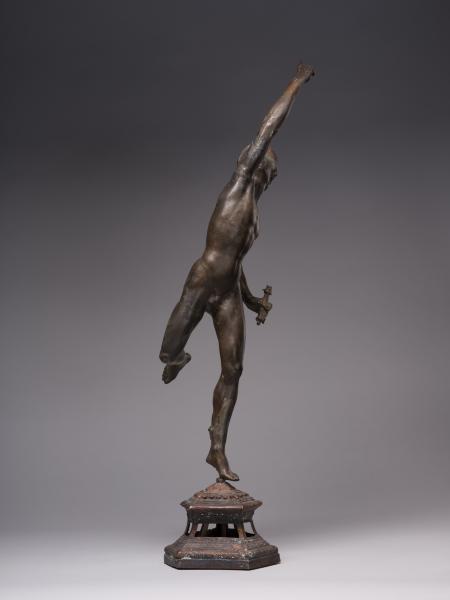
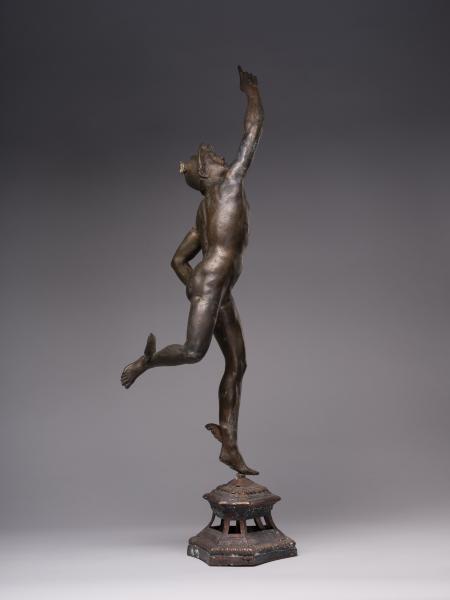
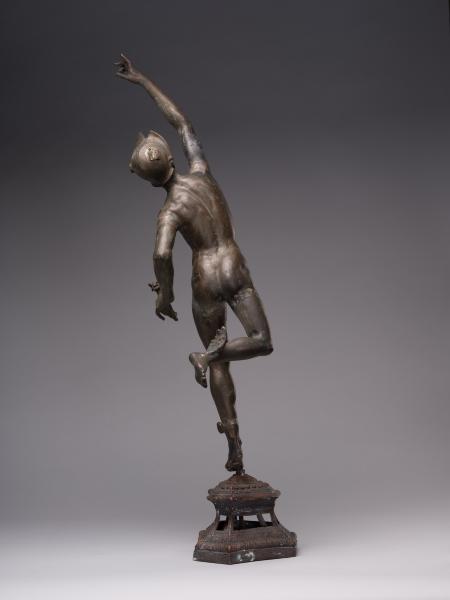
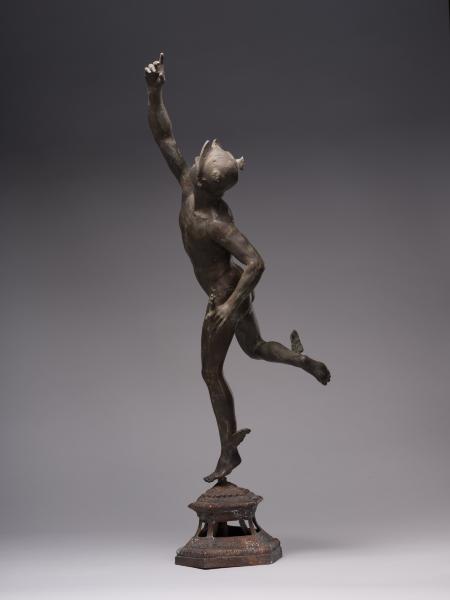
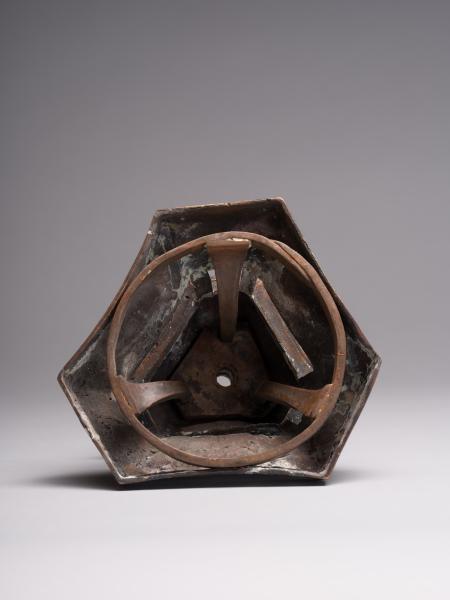
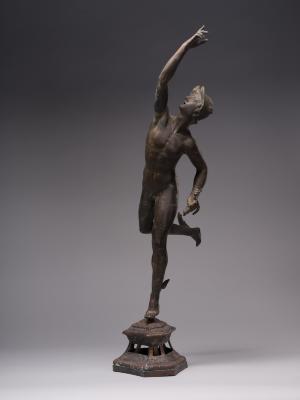
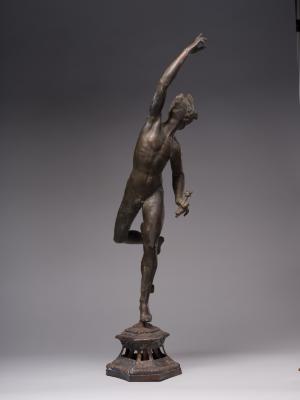
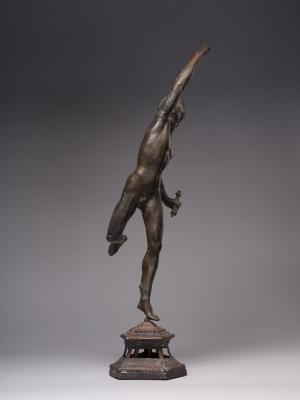
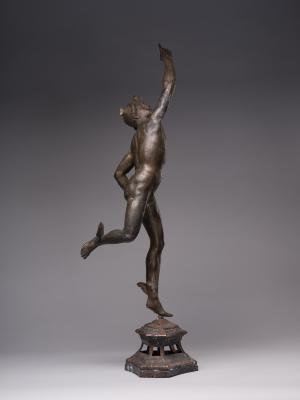
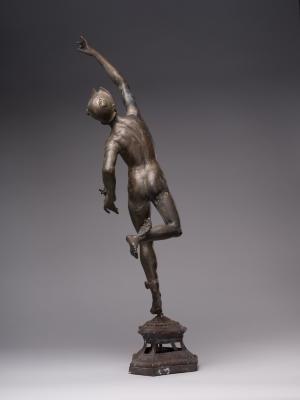
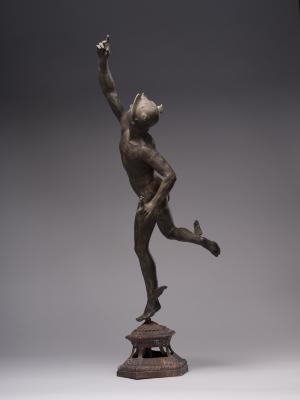
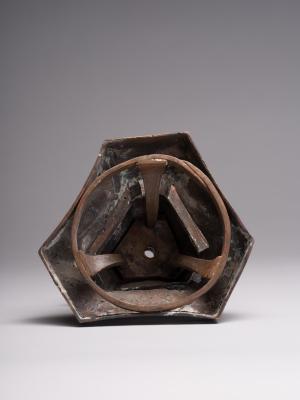
One of four variants of the figure of Flying Mercury designed by Giambologna. This composition is a variant known from collections in the United States and Great Britain, as well as from the Louvre exhibition, and was attributed in the twenty-first century as a work by Hubert Gerhard, executed between 1610 and 1620. Mercury, the Roman god of commerce (ancient Greek Hermes), is depicted in flight, pointing his right hand to the sky (to Zeus). He is wearing a winged hat, a petasus, and winged sandals on his feet, which were supposed to give him speed. Instead of the caduceus present in most versions of the composition, he holds a scroll in his hand. Originally, the figure was placed on a vertical axis, symbolising the breath of the wind god Aeolus (or Zephyr), whose head served as the sculpture's base. Now the figure is mounted on a complexly shaped podium with a hexagonal base, which was made later, replacing Aeolus' head. Unlike Gerhardt's versions, this work is less detailed, and Mercury's face is not expressive, which suggests that it was likely produced in the master's workshop or circle. However, the sculpture vividly conveys the movement of the figure, which was characteristic of Gerhardt's own works and those of his German students.
Legal regulation
Borys Voznytskyi Lviv National Art Gallery