Lion-Shaped Mascaron
Johann (Jan) Pfister
Basic information
- ID
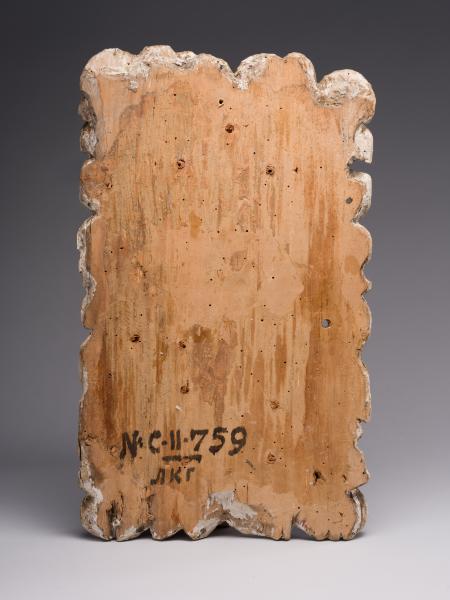
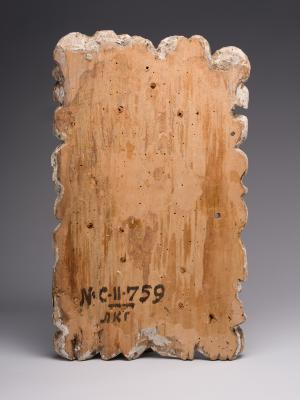
- С-II-759
- Author
- Johann (Jan) Pfister
- Name
- Lion-Shaped Mascaron
- Date of creation
- 17th c.
- Country
- Ukraine
- Technique
- carving polychromy
- Material
- wood
- Dimensions
- 45 x 25.5 cm (height x width)
Additionally
- Type
- sculpture
- Genre
- religious
- Provenance
- Bishche village, Berezhany district, Ternopil region
Information about author
Object description
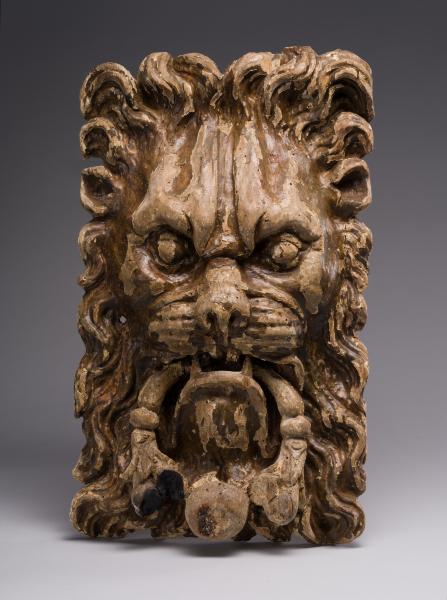
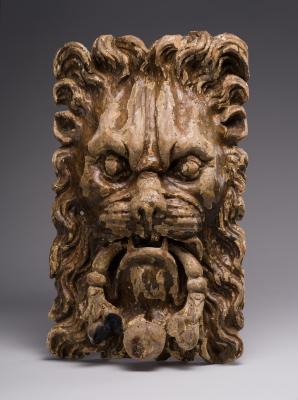
The mascaron is carved with particular attention to detail and is endowed with a distinctly pronounced emotional character. The stylised lion’s muzzle demonstrates drama and expression. The rendered features are skilfully emphasised by the play of light and shadow, producing a sense of tense dramatic effect. The carving conveys vivid mimicry – the lion’s open mouth, accentuated eyes, and wavy strands of the mane imbued with the energy of movement. Deep wrinkles, the intensity of the gaze, and the highlighted characteristic animal traits create the impression of a living, almost theatrical mask. The decorative quality of the mascaron extends beyond mere architectural ornament, serving instead as a decorative accent imbued with symbolic meaning. It functions not only as a guardian but also as an emotional emphasis, at once instilling fear and impressing with the beauty of the artist’s imagination.
Legal regulation
Borys Voznytskyi Lviv National Art Gallery