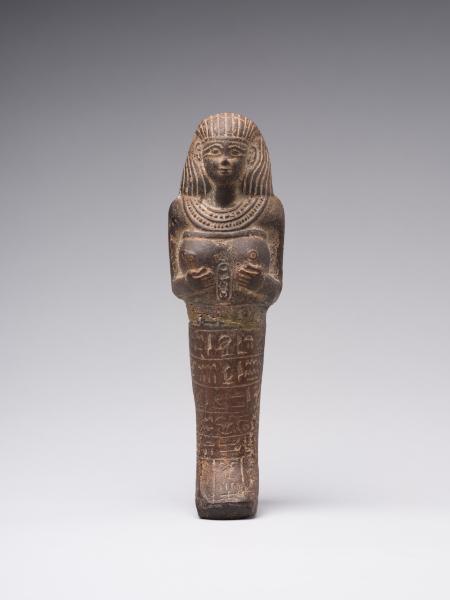
Women's Terracotta Pseudo-Ushabti
unknown
Basic information
- ID
- С-I-284
- Author
- unknown
- Name
- Women's Terracotta Pseudo-Ushabti
- Culture
- Greco-Roman period (?)
- Technique
- firing
- Material
- terracotta
- Dimensions
- 15.3 x 4.5 x 4 cm (height x width x depth)
Additionally
- Type
- sculpture ceramic
- Genre
- religious
- Provenance
- Handed over to the Gallery in 1940
- Exposition
- Zolochiv Castle (Chinese Palace)
Information about author
Object description
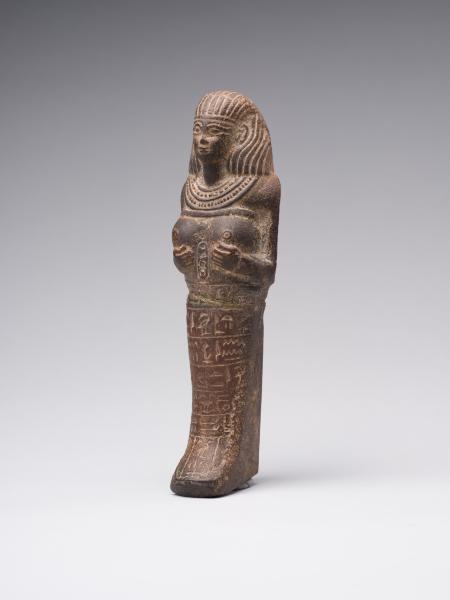
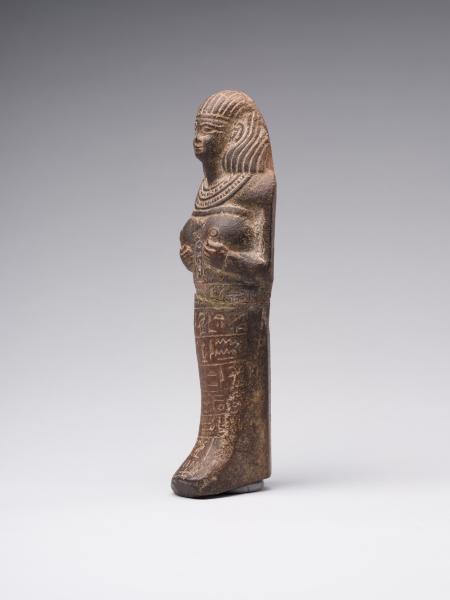
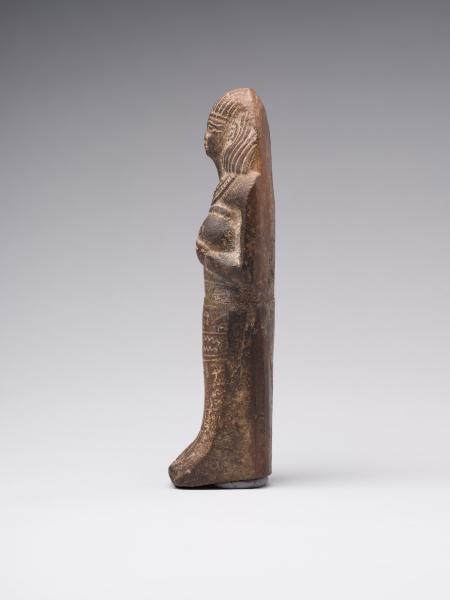
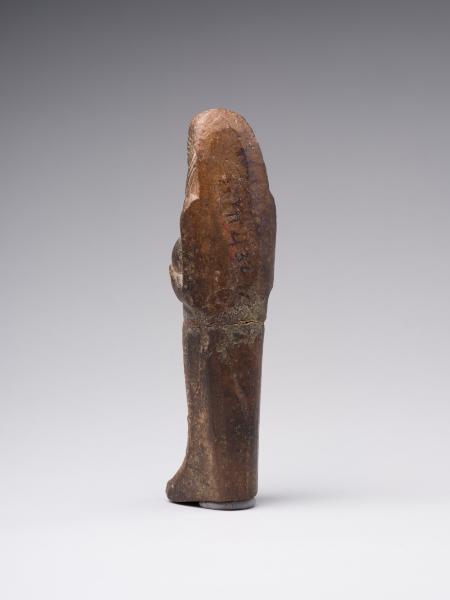
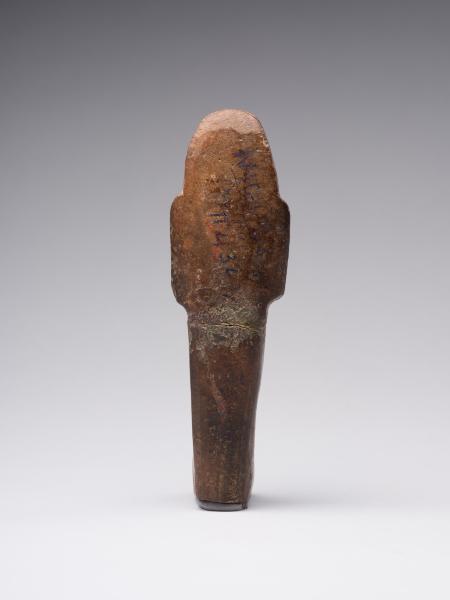
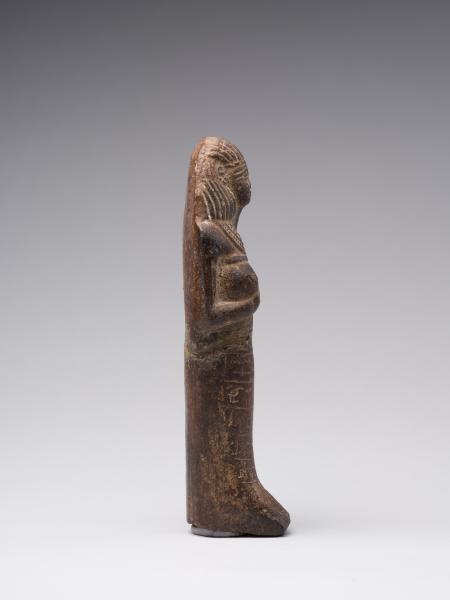
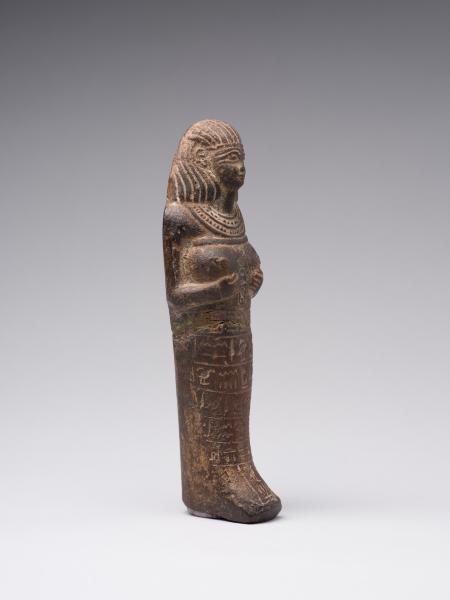
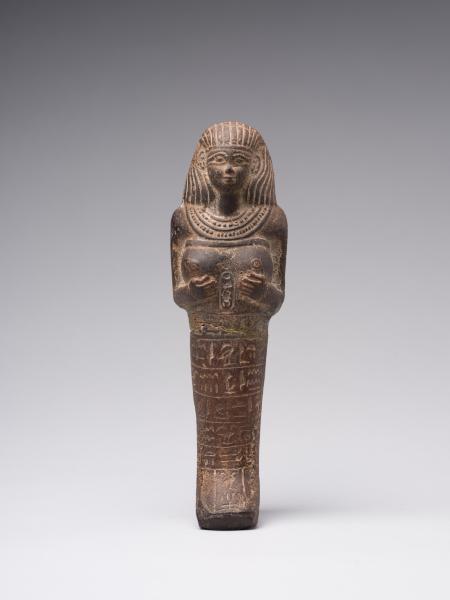
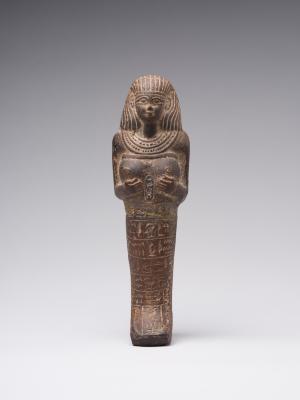
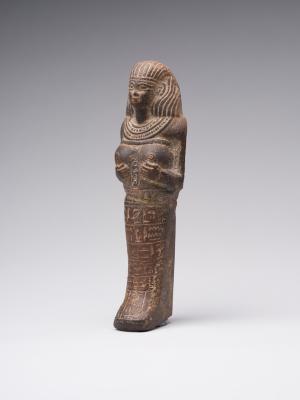
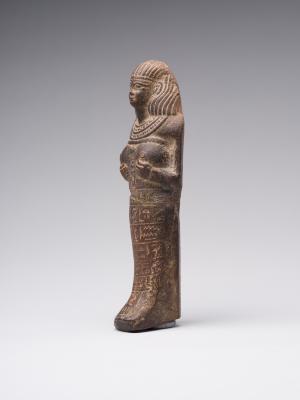
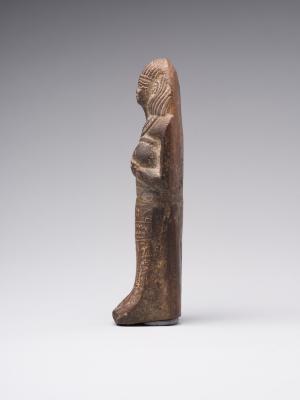
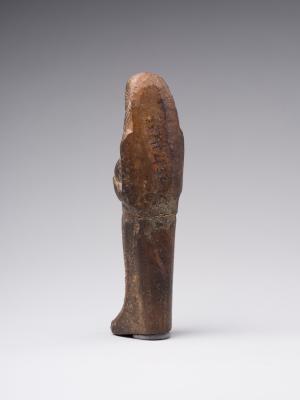
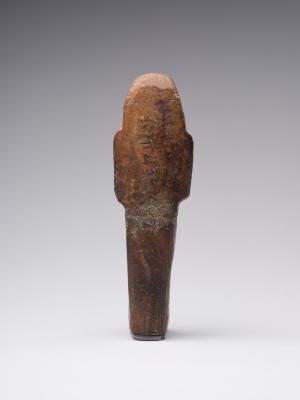
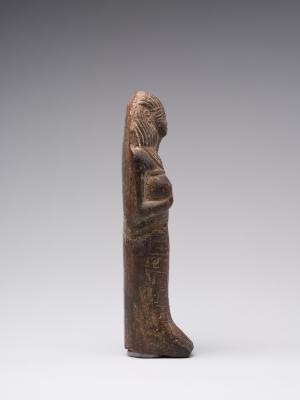
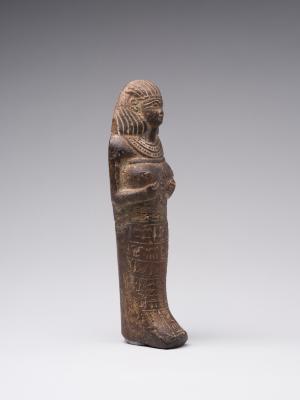
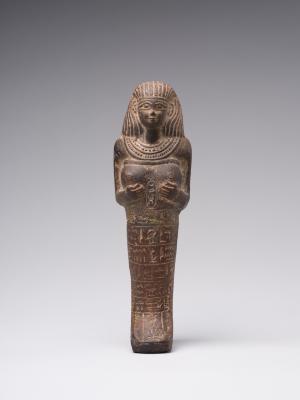
An atypical female pseudo-ushabti. The figure wears a striped wig that falls to the back. The hands are placed under the breast. The pseudo-ushabti does not hold any tools. A double necklace is shown around its neck. The head and face are well-shaped: eyebrows, eyes and ears are drawn. On the chest, between the arms, there is a cartouche with three poorly preserved hieroglyphs that should probably be read as "Men-ḫpr-Rс". This is the throne name of Thutmose III, which was sometimes inscribed on pseudo-ushabti and other objects in the Greco-Roman period (a pattern of archaisation). The "hieroglyphic" inscription is placed on the front of the pseudo-ushabti in six horizontal lines and a vertical column at the bottom. The upper line of the inscription is damaged along the line of break and glue. This figure is probably a product of the Greco-Roman period, i.e. it is a typical piece of the Aegyptiaca style, which became widespread in the Mediterranean area from the 6th century BC until the end of the Roman period.
Legal regulation
Borys Voznytskyi Lviv National Art Gallery